


Building Roads, Building Futures: The Inspiring Journey of an Engineer
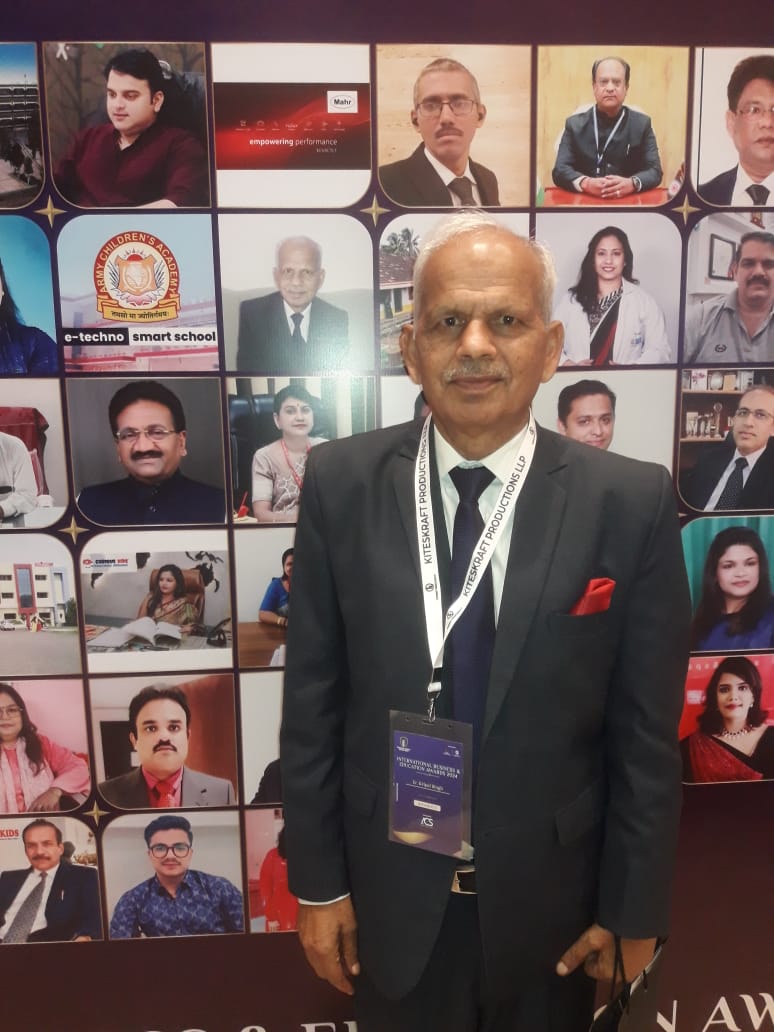
In the world of development, few sectors carry as much transformative power as roads and infrastructure. Roads do more than connect places—they unite people, ideas, and opportunities. Among those who have devoted their lives to this mission stands Mr. Kripal Singh, a seasoned engineer whose decades-long career in road construction, planning, and management reflects both technical mastery and a deep commitment to social progress.
Beginning his career in the early 1970s, he entered the Public Works Department (PWD) as an Assistant Engineer, taking on assignments in some of Uttar Pradesh’s most challenging terrains, including the Pithoragarh district. These early years demanded surveying, alignment, and road design in rugged border regions, with projects extending to altitudes above 4,500 meters near the Indo-China frontier. Working in such extreme conditions required resilience, precision, and innovation—qualities that soon became hallmarks of his professional identity.
By the 1980s, he advanced to positions such as Executive Engineer and Superintending Engineer, overseeing projects of increasing scale and complexity. From widening rural roads in Nainital to managing hill road developments in Almora and Bageshwar, he combined engineering expertise with effective project management. His ability to balance technical requirements with practical execution allowed him to deliver projects that met the highest standards of safety and durability despite difficult geographic and climatic conditions.
The late 1990s and early 2000s marked a defining period in his career. During this time, he played a pivotal role in implementing large-scale initiatives under the Pradhan Mantri Gram Sadak Yojana (PMGSY) in Uttarakhand. These projects aimed to transform rural connectivity by constructing and upgrading hundreds of kilometers of roads across hilly and remote regions. Under his leadership, projects worth hundreds of crores were executed with precision and transparency. Key assignments included the maintenance and construction of rural roads in Haridwar, Almora, and Uttarkashi; land acquisition and development funded by NABARD and the PWD; and the planning and supervision of 20- to 40-kilometer hill road projects under PMGSY.
Each project demanded not only engineering skill but also meticulous planning, financial management, and strict adherence to environmental safeguards. He supervised the preparation of detailed project reports, monitored contractors’ performance, and ensured quality through field laboratories. Land acquisition, a complex and often sensitive process, was handled with care and efficiency, allowing projects to proceed smoothly while respecting the rights of local communities.
What distinguishes him most is the recognition that roads are more than physical infrastructure—they are lifelines for rural populations. By ensuring thoughtful planning and timely execution, he opened remote villages to education, healthcare, markets, and employment. His work enabled social inclusion, economic growth, and improved quality of life for thousands of families who previously faced isolation.
Beyond his engineering achievements, he invested heavily in mentoring young engineers and strengthening institutional capacity within the public works system. Through workshops, technical guidance, and on-site training, he shared knowledge that continues to benefit future generations of professionals. His commitment to capacity building has left a lasting imprint on the industry, ensuring that high standards of accountability and excellence endure.
From his first assignment in 1972 to his final role as Team Leader for international-standard rural road projects, he has demonstrated unwavering dedication to his profession. His career is not merely a record of roads built but a chronicle of dreams realized and communities empowered.
As India continues to expand its infrastructure and uplift rural regions, the legacy of engineers like Mr. Kripal Singh serves as a powerful reminder that true progress is built brick by brick and road by road. His journey stands as a testament to how expertise, perseverance, and public service can shape the destiny of entire regions and generations.
*********************